
“I’m not scared,” the man said, even as he waited outside the West Valley field office for U.S. Immigration and Customs Enforcement.
He was summoned there for an appointment without any explanation.
“I’m not in fear,” he insisted, even though he knew of two men in his community who had shown up for ICE appointments like this and were then transported out of state to a detention facility.
His name is Zafar Zulfaqar, and he was a captain in the Afghan National Army Commando Corps working in partnership with the U.S. military for nine years. Clutched under his arm was a folder filled with letters of support, documentation of his story, and a photo of him standing side by side with American servicemembers in Afghanistan. He said that after the United States evacuated the country in 2021, he was targeted by the Taliban and they attempted to kill him.
“I come for save life, not for business, not for anything else, just for save life,” he said. “I am the person who did operation[s] shoulder by shoulder, we fought against the terrorists like al Qaeda, Daesh and ISIS. I’m still proud of that – that I did operation[s] with the U.S., with the people who come fight against the terrorists, because of peace.”
He couldn’t believe that the U.S. government would deport him.
“I will show some documentation that I have,” he said. “I used to work with [the] U.S. government. I assist them, and I don’t know what’s going on, but I’m really worried about that.”
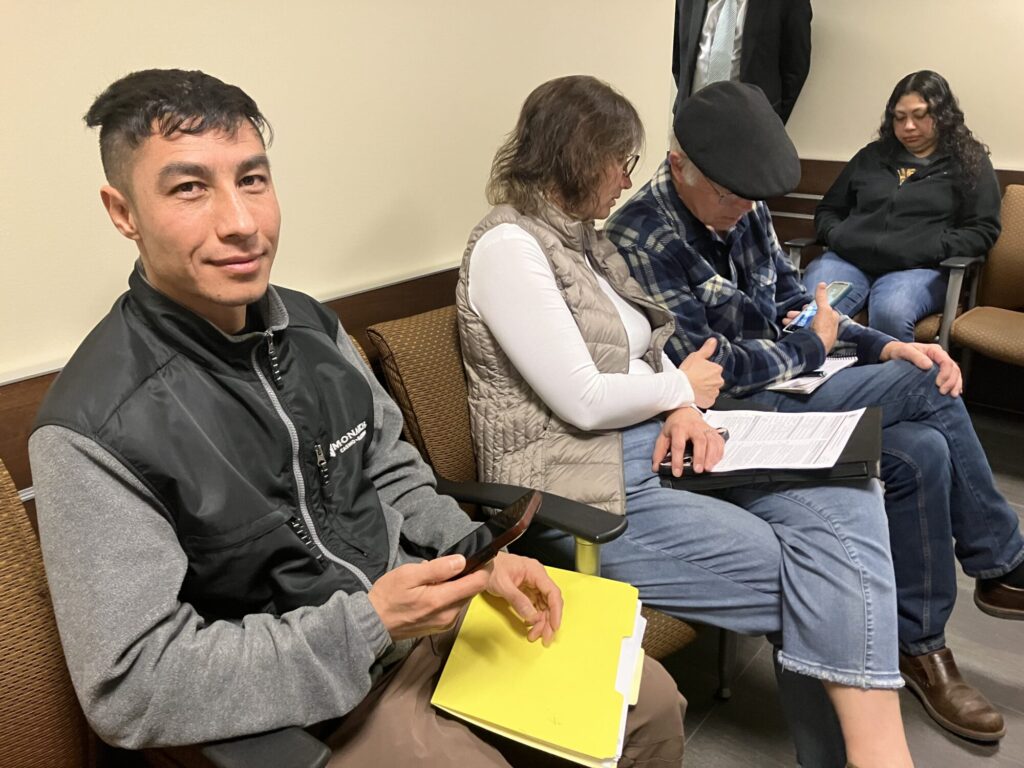
Zulfaqar came to his ICE appointment on February 12th, 2026 with an attorney and several supporters, including Dave Fulmer from San Pete County, where Zulfaqar first lived when he came to Utah.
“I’m just one of Zafar’s friends,” Fulmer said. He estimated there were about 20 people in the county that have supported him by raising money for his legal defense, giving him opportunities to work and places to live. “We know Zafar and his family. They’re good people, and that’s really the only excuse we need to help – because we know he’s a good person. He was an ally to the United States. He’s very faithful, a good citizen, has a good job. There’s no reason for us to not help.”
But in 2026, being a good, law-abiding person, serving as an ally in the military, or even obtaining legal status in the country doesn’t necessarily mean you won’t get deported. In Zafar Zulfaqar’s case, he and his wife crossed the border from Mexico in 2023, met with immigration authorities and requested asylum, which was legal at the time. Since then, he attended all required immigration appointments and was working with a permit issued by the US government.
Utah County resident Jennifer Hua helped Zulfaqar and other Afghan immigrants find legal assistance, but she said most of the immigration attorneys she talked to didn’t offer a lot of hope.
“We heard about other people who were also innocent and kept all the rules and got detained for one reason or another, who were deported or who are still in detention facilities,” Hua said.
Over 80,000 Afghans came to America on a limited number of flights after the US evacuation in August of 2021. At the time, a majority of Americans polled said they supported the resettlement of Afghans allied with the US in this country. Utah – under the leadership of Governor Spencer Cox – pledged to be a welcoming community, and raised over a million dollars in a public-private partnership to help Utah’s new neighbors from Afghanistan rebuild their lives here. But the situation for immigrants – and for Afghans in particular – has changed.
On the day before Thanksgiving in 2025, an Afghan national who had worked with the CIA in Afghanistan, shot at two West Virginia National Guard members on duty in Washington DC, killing one and wounding the other. That day, President Donald Trump held a press conference, casting all Afghans who arrived during the Biden administration as potential threats to national security.
“We must now reexamine every single alien who has entered our country from Afghanistan under Biden. And we must take all necessary measures to ensure the removal of any alien from any country who does not belong here or add benefit to our country,” the President said. “If they can’t love our country, we don’t want ‘em.”
Over the next few days, US Citizenship and Immigration Services announced additional national security measures, pausing more than a million asylum decisions and halting the processing of applications for immigrants from 19 countries deemed “high risk” – including Afghanistan. Since then, even those who were once protected under the asylum process have been held in prisons and detention facilities.
This year, the federal government purchased a warehouse in Salt Lake City with capacity for 10,000 ICE detainees. Now, the Afghans who thought they had found a refuge in Utah are uncertain about their future.
The KSL podcast Stranger Becomes Neighbor documented the effort to resettle Afghans in Utah. This episode examines the latest efforts by Utah citizens to try to prevent the detention and deportation of their Afghan neighbors. Listen now to find out what happened to Zafar Zulfaqar and others.